Showing posts with label Angels. Show all posts

Monday, August 5, 2013

Aliens, Angels, or Adopted? Who Are the Sons of God?


By Pastor Doug Batchelor

Aliens, Angels, or Adopted? Who Are the Sons of God?October 30, 1938. It was Halloween night, and much of America had tuned their radios to the Columbia Broadcasting System, which had just finished reporting on the weather and began playing music. Within moments, the broadcast was interrupted by a news flash about strange explosions on Mars. The announcer reassured the audience that as more information became available, more announcements would be made. Then the music continued.
As the night progressed, the music was interrupted frequently, now with terrifying reports of an invasion. Aliens from Mars had landed in New Jersey and in cities around the world. The Earth was under attack. Panic filled the streets as many people fled their homes.
But it was all fiction.
A young Orson Wells had adapted the H.G. Wells’ book War of the Worlds for broadcast and modified the script to present the story as though it was happening in real time. Many listeners took the fictional radio play to be real.
Those who panicked were operating with incomplete information. They had failed to hear the station announce at the beginning and the end of the broadcast that it was all mere drama. Coming in at the middle, hearing only part of the story, they had no context and ran off thinking the sky was falling.
Similarly, a passage in Genesis when read out of context has caused many to believe that Earth has been invaded by aliens from outer space. Let’s take a look at that challenging verse:
And it came to pass, when men began to multiply on the face of the earth, and daughters were born unto them, That the sons of God saw the daughters of men that they were fair; and they took them wives of all which they chose (Genesis 6:1, 2).
Some believe that the term “sons of God” refers to extraterrestrial invaders. They believe that these beings are fallen angels or aliens from space who took human females as wives and produced offspring. They rationalize this belief by saying that the progeny produced by these unions were “giants” (v. 4). They believe these unholy unions were ultimately responsible for the increased wickedness of man.
On the surface, this seems to be a reasonable explanation of Scripture. But as we shall see, without understanding the context that surrounds this passage, you can actually be confused into believing that certain fictions are real. Fortunately, we can clear up any confusion on the sons of God quite easily by gathering more information from the Bible.

Angels Are Spirits
The King James Bible uses the term “sons of God” 11 times in two primary ways. However, it never uses the term to refer to an angelic being.
“He who makes his angels spirits …” (Psalms 104:4). Angels are spirits; they are not flesh. They are all around us now, but we cannot see them. They generally remain in their spiritual form and have no physical integration in our world—they don’t go to school, get jobs, or raise families. They are here to “minister for them who shall be heirs of salvation” (Hebrews 1:14).
Even if they wanted to marry and have babies, they couldn’t; they don’t have human DNA. It would be easier for a jellyfish to marry a mountain goat than for angels to marry people. Thus, it doesn’t make practical sense to believe that our passage in Genesis refers to the marriage of angels, fallen or holy, to humans.
Angels are not born; they are created. If God wanted more angels, He wouldn’t need to marry them off to humans or other angels to reproduce. He could create them from scratch. Speaking of Lucifer, God said, “The workmanship of your timbrels and pipes Was prepared for you on the day you were created (Ezekiel 28:13 NKJV, emphasis added).
Moreover, Jesus tells us plainly that angels do not marry. Marriage is a uniquely human institution, reserved for mankind. “For in the resurrection they neither marry, nor are given in marriage, but are as the angels of God in heaven” (Matthew 22:30). Mark and Luke suggest the same thing: “Neither can they die any more: for they are equal unto the angels; and are the children of God” (Luke 20:36; some translations render it “sons of God”). Notice here that Jesus makes a distinction between angels and sons of God. They are classified separately, which means they are not the same thing.
So if the sons of God are not angels, what are they?

Cosmic Life?
While the sons of God were not space invaders, the Bible does appear to teach that there is other life in the cosmos. It is clear in Scripture that Jesus made other planets: God “has in these last days spoken to us by His Son, whom He has appointed heir of all things, through whom also He made the worlds” (Hebrews 1:2 NKJV).
In the parable of the lost sheep, the Earth represents the one lost sheep, a wandering world that went astray, the one Christ came to save. It’s easy to imagine that God, in His infinite existence, created other worlds with other physical beings. Of course, we know He had seraphim and cherubim and other angels prior to our world, so at a minimum we know there are at least those extraterrestrial creatures. “For by Him all things were created that are in heaven and that are on earth” (Colossians 1:16 NKJV). “And every creature which is in heaven and on the earth ... I heard saying: ‘Blessing and honor and glory and power Be to Him who sits on the throne, And to the Lamb, forever and ever!’ ” (Revelation 5:13 NKJV).
However, most of these other created beings do not visit this world. The Earth is infected with a deadly contagious disease called sin, and we are likely quarantined. The only ones allowed to go into a quarantined hospital ward are the hospital staff; in this case, God’s angels. They are ministering spirits.

Princes of Planets
Thousands of years ago, an intriguing meeting took place in heaven. “Now there was a day when the sons of God came to present themselves before the Lord, and Satan came also among them” (Job 1:6).
In attendance at this meeting are sons of God, as well as Satan himself. Satan says that he has come from the Earth. The sons of God were there representing their un-fallen worlds in God’s universe. Satan was there to represent the Earth.
Why would Satan be representing our world? Originally, Adam had dominion over the Earth. He was created by God to subdue and manage it. God said to Adam and Eve, “Have dominion over the fish of the sea, over the fowl of the air, and over every living thing that moveth on the earth” (Genesis 1:28).
While Adam was in obedience to God, he enjoyed dominion over the world. But once Adam sinned and obeyed Satan, that dominion was forfeited to the enemy. “To whom you present yourselves slaves to obey, you are that one’s slaves whom you obey, whether of sin leading to death, or of obedience leading to righteousness” (Romans 6:16 NKJV).
Even Jesus referred to Satan as “the prince of this world” (John 12:31).
In the Gospel of Luke, the genealogy of Jesus is traced all the way back to Adam. Notice what Luke says about this lineage: “the son of Enos, which was the son of Seth, which was the son of Adam, which was the son of God” (Luke 3:38, emphasis added).
The difference between Seth and Adam is the bellybutton. Adam was created by the hand of God; Seth was born of Eve. Adam was the son of God, created to have dominion over the Earth. Thus one definition for sons of God is those beings God Himself created to have dominion over the worlds He made. These beings were not born but were created directly by God.
Job 38:7 tells us that when our world was created, “the morning stars sang together, And all the sons of God shouted for joy.” The “morning stars” are angels, whereas “the sons of God” are the leaders of other worlds. (See Revelation 1:20.)
With that cleared up, let’s talk about the second way the term “sons of God” is used.

Heirs of Righteousness
The other meaning of sons of God refers to human beings who have been recreated by God’s Spirit. “For as many as are led by the Spirit of God, they are the sons of God” (Romans 8:14). Matthew 5:9 adds, “Blessed are the peacemakers, For they shall be called sons of God” (NKJV).
Here Jesus is obviously referring to human beings, but not just any human beings; these are peacemakers, the righteous children of God. In no way should this be construed to refer to angels or aliens.
“But as many as received him, to them gave he power to become the sons of God, even to them that believe on his name” (John 1:12). Notice that there were those who were not sons of God, but that through receiving Him became sons of God.
It should be mentioned that “sons of God” doesn’t mean just males. Many Bible translations render the phrase “children of God.” Galatians 3:26 says, “For you are all the children of God by faith in Christ Jesus.” It is by faith that a man or woman becomes a “child of God.” (See also Isaiah 56:5; Philippians 2:15.)
The inescapable conclusion from these verses and others is that the sons of God in Genesis 6 refers to the righteous children of God.

Daughters of Men
The term “daughters of men,” therefore, refers to the unrighteous children of men, those human beings who do not call on the name of the Lord. In the context of our Bible passage, “daughters of men” refers to the offspring of Cain and his wife.
Originally, Adam and Eve had two sons, Cain and Abel. Cain murdered Abel, so God gave Adam and Eve another son, Seth. He began to have children of his own, and they “began to call on the name of the Lord” (Genesis 4:25, 26). And from what we’ve seen in the Bible, those who call on the name of the Lord are called the sons of God.
Now Cain had been banished from God’s presence. He settled “in the land of Nod, on the east of Eden. And Cain knew his wife; and she conceived and bare Enoch: and he builded a city, and called the name of the city, after the name of his son, Enoch” (Genesis 4:16–18).
Here, before the Flood, we have the descendants of Cain living in cities and the descendants of Seth living in the country. As long as they remained separate, the sons of God remained pure in their religious beliefs and practices.
However, eventually they began to intermingle. Maybe the sons of God needed supplies that could be easily obtained in the cities where the daughters of men resided. The sons of God and daughters of men became familiar with each other, even friendly. Whatever the case, soon the descendants of Seth, or sons of God, began to marry the daughters of men, or the descendants of Cain.

Mixed Marriages
It’s even quite possible the sons of God went into this situation with good intentions. Maybe they believed they could convert these daughters of Cain, introducing them to the Lord their God. However, the counsel of God is clear:
Be ye not unequally yoked together with unbelievers: for what fellowship hath righteousness with unrighteousness? and what communion hath light with darkness? And what concord hath Christ with Belial? or what part hath he that believeth with an infidel? And what agreement hath the temple of God with idols? for ye are the temple of the living God (2 Corinthians 6:14–18).
God does not want His children marrying the unconverted or the unbelieving, even if they have a pretty face, the nicest disposition, or a passionate belief in another religion. It makes no difference; God says that relationship will have problems.
So the result of these intermarriages was not only giants, but sorrow. Instead of the sons of God influencing the daughters of men, the daughters of men influenced the sons of God.
Neither shalt thou make marriages with them; thy daughter thou shalt not give unto his son, nor his daughter shalt thou take unto thy son. For they will turn away thy son from following me, that they may serve other gods: so will the anger of the Lord be kindled against you, and destroy thee suddenly (Deuteronomy 7:3, 4; emphasis added).
The Bible is filled with stories about the sons of God mingling with the daughters of men and the disasters that follow as a result. Samson, chosen by God, was derailed by the Philistine women. His parents pled with him to avoid marrying a pagan bride, but he insisted on having what he wanted (Judges 14:3).
Solomon no doubt believed that he could marry the daughters from pagan nations and convert them. However, those pagan daughters drew away Solomon’s heart. This is why God is so adamant about His children not marrying unbelievers. It is almost always the case that the believer is gradually transformed by the unbeliever, not the other way around.
Jesus likewise has a warning for us in these end-times:
But as the days of [Noah] were, so shall also the coming of the Son of man be. For as in the days that were before the flood they were eating and drinking, marrying and giving in marriage, until the day that [Noah] entered into the ark (Matthew 24:37, 38).
Jesus here is likely referring to the mixed marriages of Genesis 6 that brought on the universal wickedness leading to the Flood.
As in Noah’s day, before the Flood, things that led to the destruction of the world with a deluge by water are going to happen again. They are a preview of what’s going to happen before the destruction of the world by a flood of fire when Jesus returns. History is going to repeat itself, but we don’t have to be among the repeat offenders.

Adoption Choices
Not everyone who thinks they are a son or daughter of God really is. The Pharisees boasted to Jesus that they were the children of Abraham. Jesus corrected them. “If ye were Abraham’s children, ye would do the works of Abraham” (John 8:39). This is a simple principle to test our heritage. Which “father” do we follow in our actions? Jesus told the religious leaders, “Ye are of your father the devil, and the lusts of your father ye will do” (John 8:44).
When we are born again and adopted into the family of God, we will want to imitate our heavenly Father. “He who says he abides in Him ought himself also to walk just as He walked” (1 John 2:6 NKJV).
If you are not a son or daughter of God now, the wonderful news is that you can choose a new family.
By faith Moses, when he became of age, refused to be called the son of Pharaoh’s daughter, choosing rather to suffer affliction with the people of God than to enjoy the passing pleasures of sin, esteeming the reproach of Christ greater riches than the treasures in Egypt; for he looked to the reward (Hebrews 11:24–26 NKJV).
When called by God, Moses traded in his Egyptian adoption for a heavenly one. Through Jesus, you can too.
When the fullness of the time had come, God sent forth His Son, born of a woman, born under the law, to redeem those who were under the law, that we might receive the adoption as sons. And because you are sons, God has sent forth the Spirit of His Son into your hearts, crying out, “Abba, Father!” Therefore you are no longer a slave but a son, and if a son, then an heir of God through Christ (Galatians 4:4–7 NKJV).
Right now you can choose to be a child of the King, an heir of eternal life, and become a son or daughter of God in whom He is well pleased! Just ask Him.

Saturday, July 20, 2013

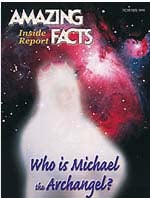
Who is Michael the Archangel?


Who is Michael the Archangel?by Doug Batchelor and David Boatwright
An Amazing Fact: When King Humbert of Italy came to the throne, Naples was on the verge of insurrection against the monarchy. Politicians were urging violent measures to force the stubborn city into submission, but King Humbert would not allow this. Then there was a sudden outbreak of cholera and the dreaded disease raged with deadly fury in the city of Naples. Ignoring the warnings of his advisors, the young king, moved with devotion and love for even his disloyal subjects, left the palace and went alone through the crowded hospitals of Naples, ministering to his subjects with his own royal hand. Many suffering people breathed prayers of gratitude to this young medical servant, not knowing it was the very king they had spurned.
When the plague was finally checked, many people learned the true identity of the noble nurse who had cared for them during the deadly crisis. Naples then became a conquered city-conquered by the love and pity of the monarch it had once refused. From then on, the people of Naples became Humbert's most loyal subjects.

The Michael Enigma
Questions frequently arise in Christian circles about the true identity of the biblical Michael, sometimes called "Michael the great Prince" or "Michael the archangel." Some claim that Michael is the highest of the heavenly angels, one of the covering cherubs, or a special messenger like Gabriel, and as such is a created being. Others, such as the Bible commentator Matthew Henry, assert that Michael is simply another name for Jesus Himself. Can we know the real identity of this mysterious individual? The key to this puzzling question is found in the Scriptures.
A quick look in a Bible concordance reveals that there are 15 references to the name Michael. The first 10 of them are found in Old Testament chronologies and obviously refer to real people named Michael. In fact, the entry for "Michael" in the lexicon (a Greek and/or Hebrew dictionary) states: "The name of an archangel and nine Israelites." It is the identity of Michael, the archangel and prince, mentioned in the last five references that we are seeking.
The first three of these references are in the apocalyptic Old Testament book of Daniel. The last two are in the New Testament books of Jude and Revelation. During an honest study and comparison of these verses and others, clues emerge that lead us to an inescapable conclusion that the identity of Michael is none other than Jesus, God the Son, and that He is not a created angel, but God's eternal Son!
At first glance it appears that the Old Testament portrays Michael as a prince and the New Testament as an angel. But by looking at other related scriptures where similar language and wording are used, we will see a different pattern emerge.

It's in the Name
First, let's consider the meaning of some words and names. In the Greek New Testament, as compared to the Old Testament, the word "angel" means "messenger," and "arch" means "chief, principle, greatest, or highest." So "archangel" simply means "highest or greatest messenger." The Hebrew name "Michael" means "who is like God" or "Who is like God?" Whether this name is a question, statement, or a challenge will be clear by further study. One angel did profess to be like God. That fallen being is Lucifer, the covering cherub in the heavenly courts who became the devil, Satan, by claiming to "be like the most High" (Isaiah 14:14). In Revelation 12:7 Satan is opposed by "Michael and his angels" and is cast out of heaven.
It is not implausible to assume that if Christ came to earth and became a man in His battle against Satan to save human beings, He might also have identified with the angels to protect them from Satan's evil influence in heaven. In fact, there are several references in Scripture to a mysterious being identified as "the angel of the Lord" before Christ's earthly incarnation. Yet each time He is mentioned there are clues to His identity. Let's review them briefly.

Hagar
After Hagar bore Ishmael to Abraham, she and the barren Sarah could no longer coexist peacefully. Sarah mistreated her now haughty handmaid until Hagar fled into the desert. "And the angel of the Lord found her by a fountain of water in the wilderness" (Genesis 16:7). The angel told Hagar to go back and submit to Sarah, and promised that her son, Ishmael, would be the father of a great nation. When the "angel" disappeared, Hagar, "called the name of the Lord that spake unto her, Thou God seest me" (verse 13). It appears Hagar recognized that the "angel" who had spoken to her was really God.

Abraham
God told Abraham to sacrifice his son, Isaac, on mount Moriah. Just as he was about to plunge the dagger into his son of promise, the angel of the Lord stopped him. "And the angel of the Lord called unto him out of heaven, and said, Abraham, Abraham: and he said, Here am I. And he said, Lay not thine hand upon the lad, neither do thou any thing unto him: for now I know that thou fearest God, seeing thou hast not withheld thy son, thine only son from me" (Genesis 22:11, 12).
It is clear that Abraham was offering his son to God and not to a mere angel. "And the angel of the Lord called unto Abraham out of heaven the second time, And said, By myself have I sworn, saith the Lord, for because thou hast done this thing, and hast not withheld thy son, thine only son: That in blessing I will bless thee, … because thou hast obeyed my voice" (Genesis 22:15-18). In recounting this experience of Abraham in Acts 3:25, Peter also identifies this "angel of the Lord" as God.

Jacob
While fleeing from his angry brother Esau, Jacob had a dream in which God confirmed the covenant of Abraham to him. After receiving assurance that God would be with him and bring him back safely to his home in Canaan, Jacob vowed to return to God a tithe of all his increase. He set up the stone he had been using for a pillow and anointed it with oil to solemnize his vow. Then he named the place Beth-el, or house of God, since God had appeared to him there.
Twenty years later Jacob was on his way back home, not a penniless fugitive, but a wealthy man. God reminded Jacob who had really brought him success. Here's how Jacob recounted the story: "And the angel of God spake unto me in a dream, saying, Jacob: And I said, Here am I" (Genesis 31:11). In verse 13 this "angel of God" identifies Himself: "I am the God of Beth-el, where thou anointedst the pillar, and where thou vowedst a vow unto me."
Then, when Jacob wrestled with a heavenly being (Genesis 32:22-32), he was given a new name and blessed. Jacob called the name of the place Peniel, "For I have seen God face to face, and my life is preserved" (verse 30). In the New Testament, Jesus is the one who blesses His people and gives them a new name (Matthew 5:3-12; Revelation 2:17). Clearly, the angel of the Lord is Jesus Himself.
When Jacob was on his death bed blessing Joseph's two sons, Ephraim and Manasseh, he used the terms "angel" and "God" interchangeably. "God, before whom my fathers Abraham and Isaac did walk, the God which fed me all my life long unto this day, The Angel which redeemed me from all evil, bless the lads" (Genesis 48:15, 16). Once again we see that the angel who redeemed Jacob is another name for our Redeemer, Jesus!

Moses
Moses saw a burning bush that was not consumed. "And the angel of the Lord appeared unto him in a flame of fire out of the midst of a bush" (Exodus 3:2). Verse four identifies this angel: "God called unto him out of the midst of the bush." And in verse six He identifies Himself. "I am the God of thy father, the God of Abraham, the God of Isaac, and the God of Jacob." The angel of the Lord identifies Himself as God!
In his last sermon before he was stoned to death, Stephen agrees with the Exodus account. "And when forty years were expired, there appeared to him in the wilderness of mount Sina an angel of the Lord in a flame of fire in a bush. When Moses saw it, he wondered at the sight: and as he drew near to behold it, the voice of the Lord came unto him, Saying, I am the God of thy fathers, the God of Abraham, and the God of Isaac, and the God of Jacob" (Acts 7:30-32).
In another instance, the children of Israel were led through the wilderness by God, "And the Lord went before them by day in a pillar of a cloud, to lead them the way; and by night in a pillar of fire, to give them light; to go by day and night" (Exodus 13:21). Moses describes it this way: "And the angel of God, which went before the camp of Israel, removed and went behind them; and the pillar of the cloud went from before their face, and stood behind them" (Exodus 14:19). Again, "the angel of God" is identified as God.

Balaam
In the story of Balaam and his talking donkey, the angel of the Lord again figures prominently. It is this angel who nearly kills the covetous prophet, who is on his way to curse God's people, and saves the donkey from her merciless master (Numbers 22:21-35). After Balaam's close brush with death, "the angel of the Lord said unto Balaam, Go with the men: but only the word that I shall speak unto thee, that thou shall speak" (verse 35). The next chapter reveals who put the words in the prophet's mouth: "And God met Balaam: … And the Lord put a word in Balaam's mouth, and said, Return unto Balak, and thus shalt thou speak" (Numbers 23:4, 5). Here again, "the angel of the Lord" turns out to be God Himself.

Gideon
Gideon had an encounter with the angel of the Lord in the book of Judges. The angel told Gideon that the Lord was with him. Gideon pointed to the oppression of Israel by the Midianites as evidence to the contrary. "And the Lord looked upon him, and said, Go in this thy might, and thou shalt save Israel from the hand of the Midianites: have not I sent thee?" (Judges 6:14). Throughout the rest of the narrative, the person speaking to Gideon is identified interchangeably as the Lord, the angel of the Lord, and the angel of God.

Manoah
Samson's mother, the wife of Manoah, was barren. "And the angel of the Lord appeared unto the woman" (Judges 13:3). This angel told her she would bear a son who would deliver the apostate Israelites from their heathen oppressors. She quickly called Manoah, who prayed for another visit from the "man of God." When the angel came the second time, Manoah asked him his name. The King James Version of the Bible says that the angel told Manoah that his name was "Secret," with a margin notation that translates it as "Wonderful." This immediately makes us think of Isaiah's familiar prophecy that the name of the coming Messiah would be "Wonderful, Counselor, The mighty God, The everlasting Father, The Prince of Peace" (Isaiah 9:6). The name "Wonderful" for the angel of the Lord who appeared to Manoah connects this "angel" with the coming Messiah who was to be called "Wonderful."

No One Has Seen the Father
Suddenly we have more leads than we can follow at once. The "angel of the Lord" is clearly shown to be God. But the Bible states, "No man hath seen God at any time; the only begotten Son, which is in the bosom of the Father, he hath declared him" (John 1:18). John 6:46 tells us, "Not that any man hath seen the Father, save he which is of God, he hath seen the Father." Obviously, since no man has seen God the Father, all of these Old Testament sightings of God as the "angel of the Lord" must have been Jesus, God the Son, veiling His glory so they could endure His presence without being consumed.

Rebuking the Accuser
There is one more important reference where the angel of the Lord appears in the Old Testament. The prophet Zechariah was given a vision of Joshua the high priest standing before the angel of the Lord. Satan is standing at his right hand to resist him. Here we see two adversaries contending over a sinful human being. In this case the sin is represented by Joshua's filthy garments (Zechariah 3:3).
In this narrative the name changes quickly from "the angel of the Lord" (verse 1) to "the Lord" (verse 2), indicating again that they are one and the same. Then the Lord makes an interesting statement. "And the Lord said unto Satan, The Lord rebuke thee, O Satan" (Zechariah 3:2) There is only one other place in Scripture, Jude verse nine, where this sentence is found, and it is spoken by Michael the archangel!
In the small New Testament epistle of Jude we see a vignette similar to Joshua and the angel in the book of Zechariah. "Yet Michael the archangel, when contending with the devil he disputed about the body of Moses, durst not bring against him a railing accusation, but said, The Lord rebuke thee" (Jude 1:9). The situations are amazingly parallel. Christ and Satan are contending over a sinner. A live one in the case of Joshua, and a dead one in the case of Moses. The debate is ended abruptly when Jesus says, "The Lord rebuke thee." Jesus also rebuked the devil when He was tempted in the wilderness. "And Jesus answered and said unto him, Get thee behind me, Satan" (Luke 4:8).

Michael the Prince
Isaiah's prophecy about the Messiah (Isaiah 9:6) reveals a key word that bears investigating. One of the names he says that would apply to the Messiah is "Prince of Peace." This immediately reminds us of the three verses in Daniel in which Michael is called a "prince."
There is another verse in Daniel where the "Prince of princes" is mentioned. Again the cosmic conflict is being played out with Christ on one side and the devil on the other, with humanity serving as the battlefield. Symbolic names identify the two arch foes. Both struggle to gain control, Satan against our will and Christ only with our willingness.
"Prince of princes" is actually the same term that is translated "prince of the host" in verse 11. This is similar to "Lord of lords" (Psalm 136:3), "God of gods" (Deuteronomy 10:17), and "King of kings" (Revelation 19:16). All these are titles of deity. He is even referred to as "Messiah the Prince" (Daniel 9:25).

One, or First?
Daniel 10:13 is probably the most difficult verse regarding Michael: "But the prince of the kingdom of Persia withstood me one and twenty days: but, lo, Michael, one of the chief princes, came to help me." It appears at first glance that Michael is only "one of" the chief princes. This is an unfortunate translation in the King James Version. The word "one" comes from the Hebrew word "echad" which also means "first," as in "first day" (Genesis 1:5). This changes the whole meaning of the verse to Michael being first of, or highest of, the chief princes. Again, a reference to Jesus.

The Voice of Michael
If we take the term "Michael the archangel" and examine the word "archangel," we see another interesting match. The only other passage in the Bible that uses the word "archangel" is 1 Thessalonians 4:16. But look at its context. "For the Lord himself shall descend from heaven with a shout, with the voice of the archangel, and with the trump of God: and the dead in Christ shall rise first." It is the voice of the archangel that raises the dead in Christ, and the Lord Himself who shouts it. This indicates that they are one and the same. Jesus is the one who shouts with the voice of the archangel, or "greatest Messenger," to raise the dead!
Obviously, angels don't have the power to resurrect the dead. Only God who gives life has the power to restore it. "For as the Father hath life in himself; so hath he given to the Son to have life in himself. … Marvel not at this: for the hour is coming, in the which all that are in the graves shall hear his voice, And shall come forth" (John 5:26, 28, 29).
In Jude we see the archangel contending with the devil for the body of Moses, who, incidentally, was resurrected and taken to heaven from whence he appeared on the mount of transfiguration to encourage Christ (Mark 9). In 1 Thessalonians, the apostle Paul describes the resurrection as happening in response to the voice of the archangel. Again we see the parallel between these two verses; both describe the archangel in the act of resurrecting.
When Michael stands up in Daniel chapter 12, there also follows a resurrection, and he is described as the one who, "standeth for the children of thy people" (verse 1). Commenting on this verse, Matthew Henry states: "Michael signifies, 'Who is like God,' and his name, with the title of 'the great Prince,' points out the Divine Savior. Christ stood for the children of our people in their stead as a sacrifice, bore the curse for them, to bear it from them. He stands for them in pleading for them at the throne of grace." Jesus is clearly the one who always stands in our place and for our defense.

Worshiping the Commander
In Revelation, Michael is portrayed as leading the heavenly hosts, or armies, in the war against the rebellious Lucifer that took place there. "And there was war in heaven: Michael and his angels fought against the dragon; and the dragon fought and his angels" (Revelation 12:7). Here the term "dragon" is a symbolic name for Satan, the leader of evil (verse 9), so it is very safe to assume that Michael is another name for Jesus, the embodiment and leader of good. But there is more evidence.
Just as Israel was preparing for its first battle after crossing into the Promised Land, Joshua had an encounter with an unusual warrior. "And it came to pass, when Joshua was by Jericho, that he lifted up his eyes and looked, and, behold, there stood a man over against him with his sword drawn in his hand: and Joshua went unto him, and said unto him, Art thou for us, or for our adversaries? And he said, Nay; but as captain of the host of the Lord am I now come. And Joshua fell on his face to the earth, and did worship, and said unto him, What saith my lord unto his servant? And the captain of the Lord's host said unto Joshua, Loose thy shoe from off thy foot; for the place whereon thou standest is holy. And Joshua did so" (Joshua 5:13-15).
Not only did Joshua worship this being, but the heavenly captain received his worship. If he had been a mere angel, he would have rebuked Joshua just like the angel rebuked John for trying to worship him (see Revelation 19:10; 22:8, 9).
In all the cases where the angel of the Lord accepts worship, it is clearly the Son of God. But where regular created angels are worshiped, they refuse it. Even Jesus reminded Satan in the wilderness, "For it is written, Thou shalt worship the Lord thy God, and him only shalt thou serve" (Luke 4:8).
In fact, all the created angels are commanded to worship Jesus as they did during His first advent. "And again, when he bringeth in the first begotten into the world, he saith, And let all the angels of God worship him" (Hebrews 1:6). The devil is infuriated because he knows that someday even he will be compelled to acknowledge Jesus as king and worship Him. "That at the name of Jesus every knee should bow, of things in heaven, and things in earth, and things under the earth; And that every tongue should confess that Jesus Christ is Lord, to the glory of God the Father" (Philippians 2:10, 11).
The phrase "Lord of hosts" is found 245 times in the Bible and refers to the "commander of God's angelic army." So the "captain of the Lord's host" that Joshua saw was not an angel, but Jesus Himself. That explains why He demanded that Joshua remove his shoes. The place was holy because Jesus was there, just as Jesus' presence at the burning bush made that ground holy for Moses. So Michael, the captain of the Lord's host, or army, is another title for Jesus.

Who Is as God!
When Phillip asked Jesus to show the disciples the Father, Christ responded: "Have I been so long time with you, and yet hast thou not known me, Philip? he that hath seen me hath seen the Father" (John 14:9).
Some think that God's Son waited 4,000 years to personally intervene in the affairs of man. Not so! Though it is true that the incarnation occurred 4,000 years after man's fall, God the Son has been personally involved in the history and affairs of His people.
What a wonderful truth that Jesus, God's eternal Son, has ever been actively occupied in watching over, providing for, and protecting His children! He spoke face to face with Abraham and Moses and wrestled with Jacob. He led the Israelites through the wilderness, providing food and water and victory against their enemies.
Remember that the title "Michael the archangel" means "The greatest messenger who is as God." It was Jesus, "the image of the invisible God" (Colossians 1:15), who brought the greatest message of hope, the gospel, to our perishing world!

Wednesday, July 10, 2013

Angel Messages From Outer Space

Angels are real! Sometimes called cherubim or seraphim, these powerful ministering spirits appear all through Bible history. Often they are seen protecting and guiding God's people, and sometimes punishing evil - but one of their most important missions is to reveal and explain prophecy. Did you know God has said something special through His angels to the stressed out people of our hectic world? In Revelation 14, God reveals some awesome last-day messages coded in the symbolism of three flying angels. So significant are these messages, that when they are completed, Jesus returns! This Guide will give you an eye-opening overview, and the following eight guides will present the incredible details. Hold on to your seat... God's personal message to you is about to be explained!
The book of Revelation reveals Jesus in a unique manner.

1. Why are we studying Revelation? Isn't it sealed?
Answer:   There are six crucial reasons to study Revelation:

A. It never has been sealed (Revelation 22:10). The age long controversy between Christ and Satan, plus the devil's strategies and last-day devious plans, are exposed in Revelation. Satan cannot easily trap people who are aware of his lying deceptions in advance, so he hopes people will believe that Revelation is sealed.

B. The very name "Revelation" means "unveiling," "opening," or "revealing" the complete opposite of being sealed. It always has been wide open.

C. Revelation is Jesus' book in a unique way. It begins, "The Revelation of Jesus Christ." It even gives a word picture of Him in Revelation 1:13-16. No other book of the Bible reveals Jesus and His last-day instructions and plans for His work and His people as does Revelation.

D. Revelation is primarily written for and geared to the people of our day, just before Jesus' return (Revelation 1:1-3 3:11 22:6, 7, 12, 20).

E. A special blessing is pronounced upon those who read Revelation and heed its counsel (Revelation 1:3 22:7).

F. Revelation describes God's end-time people and church with startling clarity. It makes the Bible come to life when you see the last-day events depicted in Revelation taking place. It also tells precisely what God's church must be preaching in the last days (Revelation 14:6-14). This Study Guide will give an overview of that preaching so you will recognize it when you hear it.

Note: Before proceeding further, please open your Bible and read Revelation 14:6-14.
God uses angels to symbolize His final three-point message.

2. God commissioned His church to take the gospel to every creature (Mark 16:15). How does He symbolize this sacred work in Revelation?
"And I saw another angel fly in the midst of heaven, having the everlasting gospel to preach. ... And there followed another angel, saying ... . And the third angel followed them, saying ... . " Revelation 14:6-9.
Answer:   The word "angel" literally means "messenger," so it is fitting that God uses three angels to symbolize the preaching of His three-point gospel message for the last days. God uses the symbolism of angels to remind us that supernatural power will accompany
the messages.
God's end-time message of hope must be delivered to every person on earth.

3. What two crucial points does Revelation 14:6 reveal about God's message for the last days?
"And I saw another angel fly in the midst of heaven, having the everlasting gospel to preach unto them that dwell on the earth, and to every nation, and kindred, and tongue, and people." Revelation 14:6.
Answer:   The two crucial points are: (1) that it is "the everlasting gospel," and (2) that it must be preached to every person on earth. The three angels' messages stress the gospel, which makes it plain that people are saved by faith in -and acceptance of- Jesus Christ alone (Acts 4:12 Mark 10:26, 27). Since no other way to salvation exists, it is evil to claim that there is some other way.

Satan's Counterfeits
Satan's counterfeits, while many, include two very effective ones: (1) salvation by works, and (2) salvation in sin. These two counterfeits are uncovered and revealed in the three angels' messages. Many, without realizing it, have embraced one of these two errors and are trying to build their salvation upon it - an utterly impossible feat. We also must stress that no one is truly preaching the gospel of Jesus for the end time who does not include the three angels' messages.
Those who revere God will find pure joy in serving Him.

4. What four distinctive points does the first angel's message cover?
"Saying with a loud voice, Fear God, and give glory to him; for the hour of his judgment is come: and worship him that made heaven, and earth, and the sea, and the fountains of waters." Revelation 14:7.
Answer:   A. Fear God. This means we should revere God and look upon Him with love, trust, and respect - eager to do His bidding. This keeps us from evil. "By the fear of the Lord men depart from evil." Proverbs 16:6. Solomon, the wise man, also said, "Fear God, and keep his commandments: for this is the whole duty of man." Ecclesiastes 12:13.

B. Give glory to God. We fulfill this command when we obey, praise, and thank God for His goodness to us. One of the major sins of the last days is un-thankfulness (2 Timothy 3:1, 2).

C. The hour of His judgment is come. This indicates that everyone is accountable to God, and it is a clear statement that the judgment is now in session. A number of translations say "has" come instead of "is" come.

D. Worship the Creator. This command rejects idolatry of all kinds -including self-worship- and totally repudiates evolution, which denies that God is Creator and Redeemer. (Many books and radio talk shows today overstress self-worth, which leads to self-worship. A Christian's self-worth is in Christ, who makes His children sons and daughters of the King of heaven.)

The gospel includes the creation and redemption of the world by the Lord God of heaven. Worshiping the Creator includes worshiping Him on the day He set aside as a memorial of Creation (the seventh-day Sabbath). That the reference in Revelation 14:7 is to the Sabbath is made clear by the fact that the words "made heaven, and earth, and the sea" were lifted right out of the Sabbath commandment (Exodus 20:11) and used here. Our true roots are found in God alone, who made us in His image in the beginning. Those who do not worship God as Creator, no matter what else they may worship,may never discover their real roots.
God's people must come out of Babylon.

5. What solemn statement does the second angel make about Babylon? What does the angel of Revelation 18 command God's people to do?
"And there followed another angel, saying, Babylon is fallen." Revelation 14:8. "I saw another angel come down from heaven. ... And he cried mightily with a strong voice, saying, Babylon the great is fallen. ... And I heard another voice from heaven, saying, Come out of her, my people." Revelation 18:1-4.
Answer:   The second angel solemnly states that "Babylon is fallen," and the voice from heaven urges all of God's people to come out of Babylon at once. Unless you know what Babylon is, you could easily end up in it. Think about it. Could you possibly be in Babylon now?
Those who worship the beast and receive his mark will be destroyed by God.

6. Against what does the third angel's message solemnly warn?
"And the third angel followed them, saying with a loud voice, If any man worship the beast and his image, and receive his mark in his forehead, or in his hand, The same shall drink of the wine of the wrath of God." Revelation 14:9, 10.
Answer:   The third angel's message warns people against worshiping the beast and his image and receiving the mark of the beast in their foreheads or hands. The first angel commands true worship. The third angel tells of the awesome consequences connected with false worship. Do you know for certain who the beast is? And what is his mark? Unless you know positively who the beast is and what his mark is, you may end up worshiping him without realizing it.
The Lord's end-time saints will find their greatest happiness in pleasing Him.

7. What four-point description does God give in Revelation 14:12 of His people who accept and follow the three angels' messages?
"Here is the patience of the saints: here are they that keep the commandments of God, and the faith of Jesus." Revelation 14:12.
Answer:   A. They are patient, persevering, and faithful to the enda big order for a "do it now" generation. God's people reveal Him by their patient, loving conduct.

B. They are saints, or holy ones, because they are fully on God's side.

C. They keep the commandments of God. These people of God happily obey His Ten Commandments and all other commandments He has given them. Their first aim is to please Him, whom they love (1 John 3:22).

D. They have the faith of Jesus. This also can be translated "faith in Jesus." In either case, God's people fully follow Jesus and fully trust Him.
When all have heard Jesus' end-time message, He will return to earth to take His people with Him to heaven.

8. What happens immediately following the teaching of the three angels' messages to all people?
"And I looked, and behold a white cloud, and upon the cloud one sat like unto the Son of man, having on his head a golden crown."
Revelation 14:14.
Answer:   Immediately after the teaching of the three angels' messages to every person, Jesus will return in the clouds (His second advent) to take His people to their heavenly home. At His appearing, the great 1,000-year blackout of Revelation chapter 20 will begin.

9. In 2 Peter 1:12, the apostle speaks of "present truth." What does he mean?
Answer:   Present truth is an aspect of the everlasting gospel that has particular urgency for a certain time. Examples are:

A. Noah's message of the Flood (Genesis 6 and 7 2 Peter 2:5). Noah was a preacher of righteousness. He taught God's love as he warned of a coming flood that would destroy the world. The Flood message was "present truth" for that time. Its urgent cry was "get into the boat." And it was so important that it would have been immoral not to preach it.

B. Jonah's message to Nineveh (Jonah 3:4). Jonah's "present truth" was that Nineveh would be destroyed in 40 days. Jonah also uplifted the Saviour, and the city repented. To omit, however, the 40-day warning would have been unfaithful and unforgivable. It was present truth. It fitted that time in a special way.

C. John the Baptist's message (Matthew 3:1-3 Luke 1:17). John's "present truth" was that Jesus, the Messiah, was about to appear. His work was to present the gospel and prepare people for Jesus' first coming. To have omitted that first-coming element of the gospel for his day would have been unthinkable.

D. The three angels' messages (Revelation 14:6-14). God's "present truth" for today is contained in the three angels' messages. Of course, salvation through Jesus Christ alone is central to these messages. However, the "present truth" of the three angels also has been given to prepare people for Jesus' second coming and to open their eyes to Satan's brilliant and highly convincing deceptions. Unless people understand these messages, Satan will indeed capture and destroy them. Jesus knew we needed these three special messages, so in loving kindness He has given them. They must not be omitted. Please pray earnestly as you examine them point by point in the next eight Study Guides.

Some of your discoveries may be almost shocking. But all will be satisfying. Your heart will be tremendously stirred. You will sense Jesus speaking to you! After all, they are His messages.

10. Who does the Bible say will come to give a "present truth" message before the great day of the Lord?
"Behold, I will send you Elijah the prophet before the coming of the great and dreadful day of the Lord." Malachi 4:5.
Answer:   Elijah the prophet. There is something significant about Elijah and his message, as we shall see in the next few questions.
God's end-time messages are also called the
God's end-time messages are also called the "Elijah" message. They call for a decision.

11. What did Elijah do that caused the Lord to focus on him?
Note: Please open your Bible and carefully read 1 Kings 18:17-40 before answering this question.
Answer:   Elijah urged the people to make up their minds whom they would serve (verse 21). The nation was almost wholly idolatrous. The people had forsaken the true God and His commandments. There was one prophet of God, Elijah, and 450 heathen prophets of Baal (verse 22). Elijah suggested that both he and the idolaters build altars and place wood and a bull on them. He then suggested they ask the true God to reveal Himself by setting fire to His altar. The heathen god did not answer, but the true God of Elijah sent fire from heaven and burned up Elijah's sacrifice.

The Message Demanded a Decision
Elijah's message came at a time of deep spiritual crisis and national apostasy. It came with such power from heaven above that it stopped "business as usual" and drew national attention. Elijah then insisted that people decide whom they would serve, God or Baal. Deeply moved and fully convinced, the people chose God (verse 39).
John the Baptist presented the
John the Baptist presented the "Elijah" message of his day. Those who preach Revelation 14:6-14 have the Elijah message for today.

12. The Elijah message has a twofold application. It applies to a "present truth" message to prepare people for Jesus' first advent and a "present truth" message to prepare people for Jesus' second advent. Who did Jesus say preached the Elijah message to prepare people for His first advent?
"There hath not risen a greater than John the Baptist." "And if ye will receive it, this is Elias [Elijah], which was for to come." Matthew 11:11, 14.
Answer:   Jesus called John's preaching to prepare people for His first advent "Elijah," or the Elijah message. John's message, as in Elijah's day, made truth very clear and then insisted on a decision. The Bible says of John the Baptist, "He shall go ... in the spirit and power of Elias [Elijah]." Luke 1:17.

13. How do we know the prophecy has a second application to our time just before the second advent?
"I will send you Elijah the prophet before the coming of the great and dreadful day of the Lord." Malachi 4:5. "The sun shall be turned into darkness, and the moon into blood, before the great and terrible day of the Lord come." Joel 2:31.
Answer:   Please take note that two events will occur before the coming of "the great and terrible day of the Lord" mentioned in Joel 2:31. One, the coming of Elijah. And two, the tremendous signs in the heavens. This helps us locate both events. The dark day occurred May 19, 1780. That same night, the moon appeared as blood. Matthew 24:29 includes one more sign, the falling of the stars, which took place November 13, 1833. From this, we know the end-time Elijah message must begin some time near or after 1833, before the coming of the great day of the Lord.

Second Elijah Message After Sky Signs
It is obvious that John's "Elijah message" does not apply to the second "Elijah message" because God's great sky signs appeared over 1,700 years after John preached his message. The Elijah message of Joel 2:31 had to begin after those sky signs in 1833 and must prepare people for Jesus' second advent. The threefold "present truth" message of Revelation 14:6-14 fits perfectly. It began around 1844 and is preparing people worldwide for Jesus' second advent (verse 14), which will take place after the threefold message has reached every person on earth.

The Message Demands a Decision
Elijah insisted evil be met head-on and that all decide whom they would serve. So it is with God's threefold message for us today. A decision must be made. God's threefold message unmasks Satan and his plans. It clearly reveals God's love and His requirements. God is calling people today back to true worship, worship of God alone. To knowingly serve and worship anyone or anything else in this crucial day amounts to disloyalty and will result in eternal death. God miraculously reached hearts in Elijah's day (1 Kings 18:37, 39) and in the days of John the Baptist. He will do the same in these last days as people respond to the three angels' messages (Revelation 18:1).
God's final Elijah message will bring families together in joy, love, and happiness.

14. What other wonderful blessing will the preaching of the Elijah (or the three angels') messages bring?
"Elijah ... shall turn the heart of the fathers to the children, and the heart of the children to their fathers." Malachi 4:5, 6.
Answer:   Praise God! The Elijah message, or three angels' messages, will bring family members together in a loving, close, joyous, heavenly relationship. What a blessed promise!
The three angels' messages focus upon Jesus.

15. The word "gospel" means "good news." Do the three angels' messages of Revelation chapter 14 provide good news?
Answer:   Yes indeed! Let's review the good news we have found in this overview of the three angels' messages:

A. Every person will have an opportunity to hear and understand the last-day gospel. Not one will be passed by.

B. The devil's brilliant, powerful plans to trap and destroy people will be revealed to us, so we need not be ensnared.

C. Heaven's supernatural power will accompany the spreading of God's message in these last days.

D. God's people will be patient. He calls them "saints."

E. God's people will have the faith of Jesus.

F. God's people will, out of love, obey His commandments.

G. God loves us so much that He has sent a very special message to prepare us for Jesus' second coming.

H. God's message for these last days will bring family members together in love and unity.

I. The major emphasis of the three angels' messages is that salvation has been provided for everyone through Jesus Christ alone. He gives His righteousness to cover our past and miraculously imparts His righteousness to us daily so we will grow in grace and truly become like Him. With Him, we cannot fail. Without Him, we cannot succeed.

A Further Word
Points of the three angels' messages that will be explained in upcoming Study Guides are:

A. God's judgment hour has arrived!

B. Come out of fallen Babylon.

C. Don't receive the mark of the beast.

Much more good news will be revealed as you prayerfully study these subjects in the next eight Study Guides. You will be surprised and gladdened at some things, shocked and saddened at others. Some points may be very hard to accept. But since Jesus sent a special message from heaven to help and guide each one of us personally in these last days, surely nothing could be more important than to hear it, understand it fully, and follow it.

16. I am relieved and thankful that Jesus has a special three-point message to guide and assist His people in these last days of earth.
Answer:  

Thought Questions
1. Will every person on earth be reached with the three angels' messages before Jesus returns? With billions of people now living, how can this be possible?
Yes, it will happen because God promised it (Mark 16:15). Paul says the gospel went "to every creature which is under heaven" in his day (Colossians 1:23). Jonah, by God's grace, reached the entire city of Nineveh in less than 40 days (Jonah 3:4-10). The Bible says God will finish the work and cut it short (Romans 9:28). Count on it. It will happen very quickly and in our day.
2. Did Moses and Elijah actually appear with Jesus at the transfiguration (Matthew 17:3) or was it only a vision?
The event was literal. The Greek word "horama", translated "vision" in verse 9, literally means "what had been seen". Moses was raised from the dead and taken to heaven (Jude 1:9), and Elijah was later translated without seeing death (2 Kings 2:1, 11, 12). These two men, who had been on earth and suffered terribly from the onslaughts of the devil and the rebellion of God's people, understood what Jesus was passing through. They came to encourage and remind Him of all who would be translated into His kingdom without seeing death (like Elijah) and raised to life from the grave to enter His kingdom (like Moses) because of His sacrifice for our sins.
3. Why did John say he was not Elijah (John 1:19-21) when Jesus said that he was (Matthew 11:10-14)?
The answer comes from Luke 1:3-17. The angel who announced John's coming birth said, "Thy wife Elisabeth shall bear thee a son, and thou shalt call his name John. ... He shall be great in the sight of the Lord. ... And he shall go before him in the spirit and power of Elias, to turn the hearts of the fathers to the children, and the disobedient to the wisdom of the just; to make ready a people prepared for the Lord." Verses 13-17. When Jesus referred to John as Elijah, He was referring to his life, spirit, power, and work being like that of Elijah. The same is true of the Elijah message of these last days. The emphasis is on the message, not the man. So John was not Elijah in person, but he was presenting the Elijah message. ("Elias" is the Greek form of "Elijah".)
4. Is it possible for someone to be preaching Jesus' full end-time truth for today without including the three angels' messages?
No! The three angels' messages must be included. In the book of Revelation, Jesus Himself reveals or stipulates His end-time message (Revelation 1:1) and says clearly that His people must keep on following what He has revealed in the book (Revelation 1:3 22:7). So faithful end-time clergymen must be preaching Jesus' messages from the book of Revelation. This, of course, includes preaching His special three-point message of Revelation 14:6-14. Notice that Jesus calls these messages the "everlasting gospel" in verse 6. He also says they must be taken to every person on earth before He returns for His people. Here are three solemn thoughts:

A. No one is truly preaching Jesus' "everlasting gospel" unless he includes the three angels' messages.

B. No one has the right to call his messages the everlasting gospel if he omits the three angels' messages.

C. The three angels' messages prepare people for Jesus' second coming (Revelation 14:12-14). Unless you hear, understand, and accept Jesus' three-point end-time messages, you may not be prepared for His second coming.

Special Messages for the End-time
Jesus, who knows what we need, gave us three special messages for the end-time. We must understand and follow them. The next eight Study Guides will make these messages clear to you.
5. Luke 1:17 says the Elijah message was to turn "the disobedient to the wisdom of the just". What does this mean?
"The just shall live by faith." Romans 1:17. The just have the wisdom to rest their salvation upon faith in the Saviour. "Neither is there salvation in any other: for there is none other name under heaven given among men, whereby we must be saved." Acts 4:12. John's message was to make this crystal clear to all. A faith that is anchored to anyone or anything other than Jesus Christ can never save people from sin and lead to a changed life. People must hear and understand this great point of truth. This truth is also the very heart of God's three-point Elijah message for today.

Tuesday, July 9, 2013

The Mark of The Beast

A tattooed number, a computer chip under the skin, or something more subtle? It's one of the most misinterpreted prophecies in all of the Bible - yet it is so important to correctly understand this subject. But in studying the mark of the beast, we must address some very sensitive issues, naming names and being specific. This is not a popular thing today, but we must be firm because God loves His people and He wants them to know the truth. This message is not ours, but Jesus'. And with eternal death facing those who receive the mark, it would be a crime to not help Him deliver this message. This lesson should probably be prefaced with a warning: "THE DEVIL DOES NOT WANT YOU TO READ AND COMPLETE THIS STUDY GUIDE." Please read Revelation 13:1-8, 14:9-12, and 16-18, and pray for the Holy Spirit to grant you an honest and understanding heart before embarking on this study adventure. An Urgent Reminder We learned from Study Guide 2 that a terrible conflict is in progress between God and the devil. It has raged through the centuries since Lucifer, heaven's most powerful angel, rebelled against God. With the angels who joined him, he attempted to overcome God and seize control of the universe. God and the loyal angels had no choice but to eject Lucifer and his angels from heaven. Lucifer, who became known as the devil and Satan, was infuriated. His determination to destroy God and control the universe has grown with every passing year. Amazingly, he has won the support of the vast majority of earth's people in his rebellion. The Lord also asks for people's loyalty and support, but He leaves all free to choose. Soon every person on earth will have aligned with either Satan or God. The final battle between Satan and God is just ahead, and it is described in the book of Revelation. This book points out that God has an emblem, or mark, which will identify His people. Satan also has an emblem, or mark, that will identify those who support him. As usual, Satan will work through an earthly power symbolized in Revelation by a beast to impose his mark. This Study Guide will reveal the beast's mark, which every lost person of the end time will receive. Unless you know what his "mark" is, how will you avoid receiving it?
The papacy is the antichrist.

1. In order to know what the "mark" is, we must first identify the beast. How does the Bible describe the beast?
Answer:   Revelation 13:1-8, 16-18 provides 11 identifying characteristics. They are listed below:

A. Rises from sea (verse 1).

B. Composite of the four beasts of Daniel chapter 7 (verse 2).

C. Dragon gives it power and authority (verse 2).

D. Receives a deadly wound (verse 3).

E. Deadly wound healed (verse 3).

F. Strong political power (verses 3, 7).

G. Strong religious power (verses 3, 8).

H. Guilty of blasphemy (verses 1, 5, 6).

I. Wars with and overcomes the saints (verse 7).

J. Rules for 42 months (verse 5).

K. Has mysterious number 666 (verse 18).

Do some of these points have a familiar ring? Certainly! We encountered many of them earlier when we studied about the Antichrist in Daniel chapter 7. The "beast" of Revelation 13 is simply another name for the "Antichrist," which we learned from Daniel 7 is the papacy.

Prophecies of Daniel and Revelation often cover the same ground as prior prophecies, but each time new features are added that help make the prophecies certain. So expect to learn some new things about the Antichrist from this Study Guide. Now let's consider, one by one, the 11 points that describe the beast.

A. It would rise from the sea (Revelation 13:1).
The sea (or water) in prophecy refers to people, or a populated area (Revelation 17:15). So the beast, or Antichrist, would arise from amid the established nations of the then-known world. The papacy, as we all know, arose in western Europe, so it fits this point.

___A Word of Explanation___

In harmony with God's command to honor all people (1 Peter 2:17), we pause here to recognize the papacy for her many good deeds and activities. Her hospitals, orphanages, care for the poor, homes for unwed mothers, and care for the aged are appreciated universally. She can honestly be lauded for many things. But, like all other organizations, she has also made mistakes. God pinpoints some of her errors in Revelation. The Lord, who blesses and comforts, must sometimes chasten and correct. Please ask His Spirit to speak to you as you study this crucial topic.

B. It would be a composite of the four beasts of Daniel chapter 7 (Revelation 13:2).
Study the comparison below to see how it all fits together:


Daniel chapter 7Revelation chapter 13
BabylonLion-like beast (vs. 4)"Mouth of a lion" (vs. 2)
Medo-PersiaBearlike beast (vs. 5)"Feet of a bear" (vs. 2)
GreeceLeopard-like beast (vs. 6)"Like unto a leopard" (vs. 2)
RomeTen-horned beast (vs. 7)"Having ... ten horns" (vs. 1)


The four beasts of Daniel 7 are depicted as part of Antichrist, or the beast, because the papacy incorporated pagan beliefs and practices from all four empires. She clothed them in spiritual garb and spread them to the world as Christian teachings. Here is one of many supporting statements from history: "In a certain respect, she [the papacy] has copied her organization from that of the Roman Empire, has preserved and made fruitful the philosophical intuitions of Socrates, Plato, and Aristotle, borrowed from both Barbarians and the Byzantine Roman Empire, but always remains herself, thoroughly digesting all elements drawn from external sources." 1 This point definitely fits the papacy.

C. The beast must receive its power, seat (capital), and authority from the dragon (Revelation 13:2).
To identify the dragon, we go to Revelation chapter 12, where God's end-time church is pictured as a pure woman. In prophecy, a pure woman represents God's true people or church (Jeremiah 6:2 Isaiah 51:16). (In Study Guide 23, we will present a detailed study of God's end-time church of Revelation chapter 12. Study Guide 22 explains Revelation chapters 17 and 18, where fallen churches are symbolized by a fallen mother and her fallen daughters.) The pure woman is portrayed as pregnant and about to deliver. The dragon crouches nearby, hoping to "devour" the baby at birth. However, when the baby is born He evades the dragon, fulfills His mission, and then ascends to heaven. Obviously the baby is Jesus, whom Herod tried to destroy by killing all the babies in Bethlehem (Matthew 2:16). So the dragon represents pagan Rome, of which Herod was a king. The power behind Herod's plot was, of course, the devil (Revelation 12:7-9). Satan acts through various governments to accomplish his ugly work in this case, pagan Rome.

We will quote just two supportive references from history, though there are many: (1) "The Roman Church ... pushed itself into the place of the Roman World-Empire, of which it is the actual continuation. ...The Pope ... is Caesar's successor." 2 (2) "The mighty Catholic Church was little more than the Roman Empire baptised. Rome was transformed as well as converted. The very capital of the old Empire became the capital of the Christian Empire. The office of Pontifex Maximus was continued in that of Pope." 3 So this point also fits the papacy. She received her capital city and power from pagan Rome.

D. It would receive a deadly wound (Revelation 13:3).
The deadly wound was inflicted when Napoleon's general, Alexander Berthier, entered Rome and took Pope Pius VI captive in February of 1798. Napoleon decreed that at the death of the pope, the papacy would be discontinued. The pope died in France in August of 1799. "Half Europe thought ... that without the Pope the Papacy was dead." 4 So this point also fits the papacy.

E. The deadly wound would be healed, and the entire world would give homage to the beast (Revelation 13:3).
Since its healing, the strength of the papacy has grown and increased until today she is one of the most powerful religio-political organizations and influence-centers in the world. Malachi Martin, consummate Vatican insider and intelligence expert, reveals the following in his best-selling book The Keys of This Blood 5 (page numbers in parentheses):


_____ABOUT THE POPE:

He is as determined to be world ruler as was Constantine in his day (49). He is protected by four governments (120). He is the best-known person of the 20th century (123). He is personal friends with the leaders of 91 countries (490). People of the world seem to him ready for strong worldwide moral government with control (160). Sixteen thousand journalists covered his American visit (490).


____ABOUT THE PAPACY:

The American ambassador says the Vatican is unmatched as a "listening post" (120). The Vatican knows by Saturday what will happen on Monday anywhere in the world (439). Papal structure is prepared for worldwide rule now (143).

Obviously, the wound is healed and the eyes of the nations are upon the Vatican, so this point also fits the papacy.

F. It would become a strong political power (Revelation 13:3, 7).
See item E above.

G. It would become a very powerful religious organization (Revelation 13:3, 8).
See item E above.

H. It would be guilty of blasphemy (Revelation 13:5, 6).
The papacy is guilty of blasphemy because her priests claim to forgive sins and her popes claim to be Christ.

I. It would war with and persecute the saints (Revelation 13:7).
The papacy did persecute and destroy millions of saints during the Dark Ages.

J. It would reign for 42 months (Revelation 13:5).
The papacy reigned for 42 prophetic months, which equals 1,260 years, from A.D. 538-1798.

Points H through J also clearly fit the papacy. We touched on them only briefly here because they were covered thoroughly in Study Guide 15, question 8, items E, G, and H.

K. It would have the mysterious number 666 (Revelation 13:18).
This verse says, "It is the number of a man," and Revelation 15:2 says it is "the number of his name." What man do you think of when you think of the papacy? Naturally, we all think of the pope. What is his official name? Here is a Catholic quote: "The title of the pope of Rome is "Vicarius Filii Dei" (English: "Vicar of the Son of God").6 Malachi Martin, in The Keys of This Blood, uses the same title for the pope on pages 114, 122. A footnote for Revelation 13:18 in some Douay [Catholic] versions of the Bible says, "The numeral letters of his name shall make up this number."

Again, the papacy fits the identification point. The beast with the "mark" is the papacy. No other power in history could possibly fit these divine descriptive points. Now that we have positively identified the beast, we can discover her mark, or symbol of authority. But first, let's look at God's sign of authority.

1Andre Retif, The Catholic Spirit, trans. by Dom Aldhelm Dean, Vol. 88 of The Twentieth Century Encyclopedia of Catholicism (New York, Hawthorne Books, 1959), p. 85.

2Adolf Harnack, What is Christianity? trans. by Thomas Bailey Saunders (New York: Putnam, 2nd ed., rev., 1901), p. 270.

3Alexander Clarence Flick, The Rise of the Mediaeval Church (reprint: New York, Burt Franklin, 1959), pp. 148, 149.

4Joseph Rickaby, "The Modern Papacy," Lectures on the History of Religion, Lecture 24, (London: Catholic Truth Society, 1910), p. 1.

5(New York, Simon & Schuster, 1990)

6"Answers to Readers' Questions," Our Sunday Visitor, Nov. 15, 1914.
The Sabbath is the sign, or mark, of God's power.


2. What is God's mark, or symbol, of authority?
"I gave them my sabbaths, to be a sign between me and them, that they might know that I am the Lord that sanctify them." Ezekiel 20:12. "It is a sign between me and the children of Israel for ever: for in six days the Lord made heaven and earth." Exodus 31:17.
Answer:   God is saying in the texts above that He gave us His Sabbath as a glorious sign of His power to create and His power to sanctify (convert and save) us. In the Bible, the words seal, sign, mark, and token are used interchangeably.7 God's sign, the Sabbath, represents His holy power to rule as Creator and Saviour. Revelation 7:1-3 says it will be written upon the foreheads (minds, Hebrews 10:16) of His people. It will signify that they are owned by Him and have His character. Hebrews 4:4-10 confirms this by saying that when we enter His rest (receive salvation), we should keep His seventh-day Sabbath holy as a symbol, or mark, of salvation. True Sabbath-keeping signifies that a person has surrendered his life to Jesus Christ and is willing to follow wherever Jesus leads.

Since the symbol, or mark, of God's authority and power is His holy Sabbath day, it seems likely that the symbol, or mark, of God's challenger, the beast, might also involve a holy day. Let's see if it does.

7(Compare Genesis 17:11 with Romans 4:11 and Revelation 7:3 with Ezekiel 9:4.)
Sunday as a holy day is the beast's mark, or symbol of authority.

3. What does the papacy say is her symbol, or mark, of authority?
Answer:   Notice the following section from a Catholic catechism:

"Question: Have you any other way of proving that the Church has power to institute festivals of precept?"

"Answer: Had she not such power, she could not have done that in which all modern religionists agree with her - she could not have substituted the observance of Sunday the first day of the week, for the observance of Saturday the seventh day, a change for which there is no Scriptural authority."8

So the papacy is here saying that it changed Sabbath to Sunday and that virtually all churches accepted the new holy day. Thus, the papacy claims that Sunday as a holy day is the mark, or symbol, of her power and authority.

8Stephen Keenan, A Doctrinal Catechism [FRS No. 7.], (3rd American ed., rev.: New York, Edward Dunigan & Bro., 1876), p. 174.
Changing Sabbath to Sunday involves altering God's law - a very serious matter.

4. Did God predict such a change in Scripture?
Answer:   Yes! In describing the Antichrist in Daniel 7:25, God said it would "think to change times and laws."

A. How has the papacy tried to change God's laws? In three different ways: In her catechisms she has (1) omitted the second commandment against veneration of images, and (2) shortened the fourth (Sabbath) commandment from 94 words to just eight. The Sabbath commandment (Exodus 20:8-11) clearly specifies Sabbath as the seventh day of the week. As changed by the papacy, the commandment reads: "Remember that thou keep holy the Sabbath day." Written thus, it can refer to any day. And, finally, she (3) divided the tenth commandment into two commandments.

B. How has the papacy attempted to change God's times? In two ways: (1) She has changed the time of the Sabbath from the seventh day to the first day. (2) She has also changed God's "timing" for the beginning and closing hours of the Sabbath. Instead of counting the Sabbath day from sundown Friday night to sundown Saturday night as God mandates (Leviticus 23:32), she adopted the pagan Roman custom of counting the day from midnight Saturday night to midnight Sunday night. God predicted these "changes" would be attempted by the beast, or Antichrist.

Notice the following section from a Catholic catechism:

"Question: Which is the Sabbath day?

Answer: Saturday is the Sabbath day.

Question: Why do we observe Sunday instead of Saturday?

Answer: We observe Sunday instead of Saturday because the Catholic Church transferred the solemnity from Saturday to Sunday." 9

Here is another Catholic statement: "The Church is above the Bible and this transference of Sabbath observance from Saturday to Sunday is proof positive of that fact." 10

The papacy is saying in these references that its successful change of Sabbath observance to Sunday worship is proof that its authority is greater, or "above," Scripture.

9Peter Geiermann, The Convert's Catechism of Catholic Doctrine (St. Louis, B. Herder Book Co., 1957 ed.), p. 50.

10The Catholic Record (London, Ontario, Canada, Sept. 1, 1923).
The papacy has changed Sabbath to Sunday.

5. How could anyone dare attempt to change God's holy day?
Answer:   We ask the papacy, "Did you really change Sabbath to Sunday?"

She replies, "Yes, we did. It is our symbol, or mark, of authority and power."

We ask, "How could you even think of doing that?"

It's a pertinent question. But the question the papacy officially asks Protestants is even more pertinent. Please read it carefully:

"You will tell me that Saturday was the Jewish Sabbath, but that the Christian Sabbath has been changed to Sunday. Changed! but by whom? Who has authority to change an express commandment of Almighty God? When God has spoken and said, Thou shalt keep holy the seventh day, who shall dare to say, Nay, thou mayest work and do all manner of worldly business on the seventh day but thou shalt keep holy the first day in its stead? This is a most important question, which I know not how you can answer. You are a Protestant, and you profess to go by the Bible and the Bible only and yet in so important a matter as the observance of one day in seven as a holy day, you go against the plain letter of the Bible, and put another day in the place of that day which the Bible has commanded.

The command to keep holy the seventh day is one of the ten commandments you believe that the other nine are still binding who gave you authority to tamper with the fourth? If you are consistent with your own principles, if you really follow the Bible and the Bible only, you ought to be able to produce some portion of the New Testament in which this fourth commandment is expressly altered." 11

11Library of Christian Doctrine: Why Don't You Keep Holy the Sabbath-Day? (London: Burns and Oates, Ltd.), pp. 3, 4.

Tragically, both Catholicism and Protestantism stand guilty before the judgment bar of heaven for rejecting God's holy Sabbath, His sacred sign of identification.
Religious leaders who ignore God's holy Sabbath will face His indignation.

6. What solemn warnings has God given regarding His law and His sign, or mark?
Answer:   A. God warns religious leaders against causing people to stumble by saying that some commandments do not matter (Malachi 2:7-9). For example, some ministers teach, "It doesn't matter what day you keep holy."

B. God warns people who want their ministers to preach smooth fables rather than the truth about His law (Isaiah 30:9, 10).

C. God warns people about hardening their hearts against the truth of His law (Zechariah 7:12).

D. God warns people who say it would seem "strange" to keep God's lawlike the Sabbath, for example (Hosea 8:12).

E. God states that the upheaval, tragedy, problems, and woes of earth come because people refuse to follow His law, and have even tried to change it (Isaiah 24:4-6).

F. God warns religious leaders who refuse to preach the prophecies of the end time (Isaiah 29:10, 11).

G. God solemnly warns that leaders who teach there is really no difference between sacred things (such as God's holy Sabbath) and common things (such as Sunday) will face His indignation (Ezekiel 22:26, 31).
The forehead is a symbol of the mind.  People will be marked in their foreheads by observing Sunday as a holy day.
The forehead is a symbol of the mind. People will be marked in their foreheads by observing Sunday as a holy day.

7. Revelation 13:16 says people will receive the mark of the beast in the forehead or in the hand. What does this mean?
Answer:   The forehead represents the mind (Hebrews 10:16). A person will be marked in the forehead by a decision to keep Sunday as a holy day. The hand is a symbol of work (Ecclesiastes 9:10). A person will be marked in the hand by working on God's holy Sabbath or by going along with Sunday laws for practical reasons (job, family, etc.). The sign, or mark, for either God or the beast will be invisible to people. You will, in essence, mark yourself by accepting either God's sign or mark, the Sabbath, or the beast's mark, Sunday. Though invisible to men, God will know who has which mark (2 Timothy 2:19).
God requires His people to stop trampling upon His holy day.

8. According to Isaiah 58:1, 13, 14, what decisive message does God deliver to His people in the last days?
"Cry aloud, spare not, lift up thy voice like a trumpet, and shew my people their transgression." "If thou turn away thy foot from the sabbath, from doing thy pleasure on my holy day; and call the sabbath a delight, ... Then shalt thou delight thyself in the Lord." Isaiah 58:1, 13, 14.
Answer:   He says, show "my people" that they are (innocently perhaps) sinning because they are trampling on My holy day, and ask them to quit breaking My Sabbath so I can bless them. Speak loudly so they will hear you!

Notice that the third angel of Revelation 14:9-12, who brings the message about the mark of the beast, speaks with a loud voice also (verse 9). The message is too important to treat as ordinary. It's a life-or-death issue. Jesus says His sheep, or people, will follow Him when He calls them. (John 10:16, 27).

When laws are passed forcing Sunday worship, those who comply will receive the beast's mark.

9. Do people who worship on Sunday (as a holy day) have the mark of the beast now?
Answer:   No! No one will have the mark of the beast until Sunday worship becomes an issue forced by law. At that time (just ahead), those who decide to follow the false teachings of the beast and worship on Sunday (the beast's counterfeit holy day) will receive the mark of the beast.

Those who follow Jesus and obey His truth will keep His Sabbath day holy and receive His mark. Those who expect to refuse the beast's mark in the future must step under Jesus' Sabbath banner now. His power is available to those who obey Him (Acts 5:32). Without Him, we can do nothing (John 15:5). With Him, all things are possible (Mark 10:27).
Only those who have God's mark, or sign, in their foreheads will enter heaven.

10. According to the book of Revelation, whom did John specifically see in God's eternal kingdom?
Answer:   The answer is threefold and very clear:

A. Those who have God's mark, or sign (His Sabbath), in their foreheads (Revelation 7:3).

B. Those who refused to identify with the beast or his image and who refused to have his mark or name in their foreheads (Revelation 15:2).

C. The people who today, and for eternity, follow where Jesus leads, trusting Him fully in everything (Revelation 14:4). There is no other way.
Following Jesus must include keeping His seventh-day Sabbath holy.

11. What is Jesus saying to people today?
"He that followeth me shall not walk in darkness, but shall have the light of life." John 8:12.
Answer:   What a fantastic promise! If we follow Him, we will not end up in darkness but will, instead, have glorious truth. Nothing could be more exciting! Further, following Him and keeping His Sabbath will put God's mark on our foreheads and protect us from the dreadful plagues (Psalms 91:10) that will fall upon the disobedient (Revelation chapter 16). It also marks us as ready for translation at Jesus' second coming. What blessed protection and assurance God has offered us!

An Urgent Alert
You will discover some astounding information as you study the final three Study Guides of the nine that deal with the three angels' messages of Revelation 14:6-14. These Study Guides will explain (1) the role of the United States in earth's final conflict, (2) how churches and religions of the world will be involved, (3) what world conditions will precipitate earth's final battle, and (4) Satan's amazing strategy for deceiving billions.

Perhaps you are wondering what Protestant churches have to say about the papal claim for changing Sabbath to Sunday. The quotes that appear in the "Your Thought Questions Answered" section of this lesson will provide the shocking answers.

12. I have now decided to begin keeping His seventh-day Sabbath (Saturday) as His holy day and follow Him wherever He leads.
Answer:

Thought Questions
1. What do other preachers and pastors say about the Sabbath and Sunday?
Answer:
Here are a host of comments from churches and other authorities about the Sabbath:

Baptist: "There was and is a commandment to keep holy the Sabbath day, but that Sabbath day was not Sunday. ... It will be said, however, and with some show of triumph, that the Sabbath was transferred from the seventh to the first day of the week. ... Where can the record of such a transaction be found? Not in the New Testament -- absolutely not. There is no scriptural evidence of the change of the Sabbath institution from the seventh to the first day of the week." Dr. Edward T. Hiscox, author of The Baptist Manual, in a paper read before a New York ministers' conference held Nov. 13, 1893.

Catholic: "You may read the Bible from Genesis to Revelation, and you will not find a single line authorizing the sanctification of Sunday. The Scriptures enforce the religious observance of Saturday, a day which we [Catholics] never sanctify." James Cardinal Gibbons, The Faith of Our Fathers, 16th edition, 1880, p. 111.

Church of Christ: "Finally, we have the testimony of Christ on this subject. In Mark 2:27, he says: 'The Sabbath was made for man, and not man for the Sabbath.' From this passage it is evident that the Sabbath was made not merely for the Israelites, as Paley and Hengstenberg would have us believe, but for man ... that is, for the race. Hence we conclude that the Sabbath was sanctified from the beginning, and that it was given to Adam, even in Eden, as one of those primeval institutions that God ordained for the happiness of all men." Robert Milligan, Scheme of Redemption, (St. Louis, The Bethany Press, 1962), p. 165.

Congregationalist: "The Christian Sabbath [Sunday] is not in the Scriptures, and was not by the primitive church called the Sabbath." Dwight's Theology, Vol. 4, p. 401.

Episcopal: "Sunday (Dies Solis, of the Roman calendar, 'day of the sun', because dedicated to the sun), the first day of the week, was adopted by the early Christians as a day of worship. ... No regulations for its observance are laid down in the New Testament, nor, indeed, is its observance even enjoined." "Sunday," A Religious Encyclopedia, Vol. 3, (New York, Funk and Wagnalls, 1883) p. 2259.

Lutheran: "The observance of the Lord's day [Sunday] is founded not on any command of God, but on the authority of the church." Augsburg Confession of Faith, quoted in Catholic Sabbath Manual, Part 2, Chapter 1, Section 10.

Methodist: "Take the matter of Sunday. There are indications in the New Testament as to how the church came to keep the first day of the week as its day of worship, but there is no passage telling Christians to keep that day, or to transfer the Jewish Sabbath to that day." Harris Franklin Rall, Christian Advocate, July 2, 1942.

Moody Bible Institute: "The Sabbath was binding in Eden, and it has been in force ever since. This fourth commandment begins with the word 'remember,' showing that the Sabbath already existed when God wrote the law on the tables of stone at Sinai. How can men claim that this one commandment has been done away with when they will admit that the other nine are still binding?" D. L. Moody, Weighed and Wanting, p. 47.

Presbyterian: "Until, therefore, it can be shown that the whole moral law has been repealed, the Sabbath will stand. ... The teaching of Christ confirms the perpetuity of the Sabbath." T. C. Blake, D.D., Theology Condensed, pp. 474, 475.

Pentecostal: "'Why do we worship on Sunday? Doesn't the Bible teach us that Saturday should be the Lord's Day?' ... Apparently we will have to seek the answer from some other source than the New Testament." David A. Womack, "Is Sunday the Lord's Day?" The Pentecostal Evangel, Aug. 9, 1959, No. 2361, p. 3.

Encyclopedia: "Sunday was a name given by the heathen to the first day of the week, because it was the day on which they worshiped the sun, ... the seventh day was blessed and hallowed by God Himself, and ... He requires His creatures to keep it holy to Him. This commandment is of universal and perpetual obligation."

Eadie's Biblical Cyclopedia, 1872 ed., p. 561.